July 1981

Icon

Uncovering the Truth About the 1981 Hunger Strike

Excerpt from Adams interview with Irish News

Gerry Adams Interview with Diana Rusk: excerpt on 1981 Hunger Strike
The Irish News
11 February 2010

Diana Rusk: Turning to the Hunger Strike, there is a vocal minority that believe you turned down a possible deal with the British government after the fourth hunger striker died. What is your response to that?

Gerry Adams: It is not true.

Diana Rusk: It is not true that you turned down a possible deal?

Gerry Adams: It was never in our capacity to turn down or to accept. The rules which were set out by the prisoners meant it was over to them. It was they that decided so it’s not true.

Diana Rusk: Did you inform the IRA ‘army council’ of Brendan Duddy’s offer at the time?

Gerry Adams: There wasn’t a deal.

Sourced from The Irish News

  • Print
  • email
  • Add to favorites
  • Twitter
  • Facebook
  • Netvibes
  • MySpace
  • Google Bookmarks
  • Live
  • Digg
  • del.icio.us
  • NewsVine
  • Technorati
  • StumbleUpon
  • FriendFeed

Irish News letters page: There was no hunger strike offer

There was no hunger strike offer
Irish News letters page
Manus McDaid, Derry
07/12/09

With reference to the letter entitled ‘The truth about the Hunger Strikers’ by Mr Tony O’Hara (October 22), one has to reiterate again the position taken by the hunger strikers the second time around.

They made five demands to be met by a response by the British government in writing and delivered to them by a British government representative in person.

Anything less than that was to be rejected.

I imagine the H-blocks were awash with rumours of concern, hope and fear for the well-being of the hunger strikers.

I believe that the terms ‘deals’ ‘agreements’ were freely used.

In that climate it would not be surprising if some failed to understand the difference between a verbal deal and a written agreement.

As I understand there may have been work in the hope that a written agreement might be thrashed out.

I understand that a deal was returned by Mrs Thatcher who described it as a ‘dangerous precedent’.

So no document bears witness to an offer by the British:
• ‘the mountain climber’ said he never saw a document
• Rurai O Bradaigh who was very close to the events of 1981 said the IRA leadership had no awareness of a deal [a document]
• the chaplains in the Kesh knew nothing of a document.

The hunger strike was brought to an end when clergy argued for that end on moral grounds – not on the existence of a documented offer to the strikers based on the latter’s conditions.

So Mr O’Hara on your ‘factual side’ you have Mr O’Rawe saying there was a deal and Mr Garrett Fitzgerald is pretty light in the absence of a written document.

It is important to separate ‘local talk’ and a distinctive ‘deal’ verbally agreed maybe.

The requirement of the hunger strikers was for written propositions by the British given to them.

One ought to be alert that any kind of public inquiry critically needing British involvement is a non-starter.

Sourced from the Irish News

  • Print
  • email
  • Add to favorites
  • Twitter
  • Facebook
  • Netvibes
  • MySpace
  • Google Bookmarks
  • Live
  • Digg
  • del.icio.us
  • NewsVine
  • Technorati
  • StumbleUpon
  • FriendFeed

Irish News letters page: Act provides facts

Act provides facts
Irish News letters page
T Molloy, Belfast 11
21/11/09

Sean Flynn (The Irish News, October 17) says that he visited INLA hunger strikers on July 5 1981 and they were not aware that talks were going on in the background.

He says he saw Danny Morrison in the prison. Morrison says he did not see Flynn and he believes that Flynn has mixed up his dates.

This can be resolved very easily. Under the Freedom of Information Act Morrison applied for details of all visits to the hunger strikers on July 5 1981.

He received a facsimile of a document which proves that he visited all the hunger strikers (thus suggesting that he did tell the INLA men about talks).

Why doesn’t Sean Flynn do the same – apply under the Freedom of Information Act to prove that he visited the H-blocks on Sunday, July 5 1981?

Sourced from the Irish News

  • Print
  • email
  • Add to favorites
  • Twitter
  • Facebook
  • Netvibes
  • MySpace
  • Google Bookmarks
  • Live
  • Digg
  • del.icio.us
  • NewsVine
  • Technorati
  • StumbleUpon
  • FriendFeed

Irish News letters page: Only an inquiry can solve 1981 Hunger Strike issues

Only an inquiry can solve 1981 Hunger Strike issues
Irish News letters page
Gerard Foster, Andersonstown
20/11/2009

Having read the two articles on the 1981 Hunger Strike issue (Irish News, October 22) of an offer made by the British, a number of things jumped out at me.

Firstly, how Richard O’Rawe stuck to asking questions and quoting named sources to make the points that he wanted to make of the ‘kitchen cabinet’ led by Gerry Adams. How he dealt with those who are trying to deride the debate using emotional points instead of answering the questions asked or trying to say that those who believe there is a version different from the Adams and Co line are calling the hunger strikers “dupes” or “fools”.

Secondly, in the article by Bernard Fox he was unable or unwilling to answer the points made by the Republicans who do not toe the Adams line. He was critical of the former Blanketmen who are asking questions about July 1981, as to “why they would wait all these years to bring this out”.

Yet he himself said in the same article “It took me 20 years before I could even speak openly about my experiences”.

Surely Bernard that answers your own point about the time span?

Bernard says he is emotional and raw even now for him and these claims just add to the pain, and then says he can only imagine what it must be like for the families of the 10 lads. Again he is using the Adams technique of tugging at people’s hearts by talking about the families and their pain instead of answering the questions. He seems to forget that at least two of the families are asking for an inquiry into the July 1981 offer.

Is their hurt and pain any less than the other families?

Thirdly, Bernard also states he has no time for inquiries and goes on to say “what is needed is the truth and it would be naive to think the British will ever tell the truth”.

We don’t need the British to tell the truth, what is needed is for the kitchen cabinet to answer the questions asked instead of running away from the issue and playing on people’s emotions, changing their version of the events in July 1981, contradicting each other and themselves. Why has Bernard avoided these things instead of telling us that “we [the prisoners] knew he [Bik] wasn’t going to let us down”?

Yet even Bik has changed his version a number of times of what actually happened in July 1981.

Not very reassuring is it?

Lastly, Bernard criticised claims the last six hunger strikers were allowed to die “in order to maximise electoral support for Sinn Fein”. I would ask Bernard who is making these claims? I know of nobody asking for the inquiry who is also claiming this.

An inquiry will look at what happened in July 1981 asking all those involved in the Mountain Climber offer what part they played and were the prisoners told everything. After it concludes with its findings then people will be asked why they acted the way they did and for what reasons. Adams and his kitchen cabinet cannot hide behind closed doors at private meetings hoping this will go away, it will not. Tony O’Hara in the letters page in the same issue of The Irish News asks questions of Gerry Adams that cannot be avoided much longer.

Sourced from the Irish News

  • Print
  • email
  • Add to favorites
  • Twitter
  • Facebook
  • Netvibes
  • MySpace
  • Google Bookmarks
  • Live
  • Digg
  • del.icio.us
  • NewsVine
  • Technorati
  • StumbleUpon
  • FriendFeed

Irish News letters page: The Facts of the Hunger Strike Have Already Been Established

The facts of the hunger strikes have already been established
Irish News letters page
Carrie Twomey
17/11/09

Brendan Hughes’s second anniversary is coming up in February. Manus McDaid (October 26) seems to think that because he is not long dead, no one can know his reasons for ending the first hunger strike – “we can only surmise”, he writes.

Actually, we can, and do know his reasons. They are documented in numerous books and interviews. As well, many former prisoners of the time know the truth.

It is not a matter of guessing, as Brendan was very forthright about the issue, even within the pages of The Irish News, where he wrote:

“As the IRA leader in charge of that hunger strike I had given Sean McKenna a guarantee that were he to lapse into a coma I would not permit him to die.

“When the awful moment arrived I kept my word to him.

“Having made that promise, to renege on it once Sean had reached a point where he was no longer capable of making a decision for himself, I would have been guilty of his murder.

“Twenty-five years on, I have no reason to change my mind that the decision I made to save the life of Sean McKenna was the proper one.

“Faced with similar circumstances I would do the same again.

“History may judge my actions differently but preventing Sean McKenna from becoming history rather than my own place in history was my prevailing concern.” (July 13 2006)

And yes, I also heard it from Brendan personally, having spoken with him about this on a number of occasions. It was a time that weighed heavily on his heart until his dying day. I do personally know how much he suffered.

The facts of the second hunger strike have also been established: in early July there was a substantial offer from Thatcher that contained four of the five demands, the prison leadership accepted that offer, they were over-ruled by their representatives on the outside and the hunger strike was prolonged a further four months, with six young men dying needlessly.

The British had their offer in writing ready to go into the prison and to the press – this is now a matter of historical record, thanks to FOI (Freedom of Information) release of documents.

“The statement has now been read and we await provo reactions (we would be willing to allow them a sight of the document just before it is given to the prisoners and released to the press)” – Extract from a Telegram from the Northern Ireland Office to the Cabinet Office.

This internal document is very clear about the sequence of events the British were going to follow.

All they were waiting for was the word of Gerry Adams, to tell them the prisoners would accept the offer.

The distrust was mutual; the British would not move without knowing the answer would be yes ahead of time. This choreography, as we have come to know so well from the machinations of the peace process, is typical of the British and their relationship with Sinn Fein.

The prisoners would not have been left without recourse had Adams given the British the indication they needed to seal the deal, if the offer was dubious. But they were never given the chance. They were told nothing.

According to Laurence McKeown’s own account, Adams went in to the hunger strikers and said nothing was on the table, there was no movement from the British. He said this to Kieran Doherty’s parents as their son lay dying in the next room.

Only a few days prior Thatcher was sending Adams drafts of a speech she was prepared to give announcing the ending of the hunger strike, yet we are to believe that Adams was holding out because it was “wanted in writing the response of the British to their five demands”.

If Thatcher sending a draft copy of her speech on the ending of the Hunger Strike, for the purpose of taking suggestions from Adams, does not qualify as bona fides indicating the commitment of the British to the offer they had made, what would?

It is ridiculous to hold on to the lie that the ending of the first hunger strike is the reason those managing the Hunger Strike on the outside would not accept Thatcher’s offers. The historical record shows that plainly to be complete nonsense. It will only become more evidentially nonsense as time goes on and more information is made available.

Sourced from the Irish News

  • Print
  • email
  • Add to favorites
  • Twitter
  • Facebook
  • Netvibes
  • MySpace
  • Google Bookmarks
  • Live
  • Digg
  • del.icio.us
  • NewsVine
  • Technorati
  • StumbleUpon
  • FriendFeed

Thomas ‘Dixie’ Elliott: “We got nothing”

Tuesday, November 10, 2009
“We got nothing”
by Thomas ‘Dixie’ Elliott

This is an unedited version of what was carried in the Irish News

I often look back to the time I spent on the blanket protest and feel privileged that I had the honour of spending some of those dark and more often than not, cold and brutal days sharing a cell in the company of Tom McElwee and Bobby Sands. These patriots, like the other brave hunger strikers, dreamt that they would live to bear witness to the unity of the Irish people within the political framework of a thirty-two county socialist republic, and it was for that reason alone that they had been imprisoned. Having spoken to Tom and Bobby and other hunger strikers, I know that they also looked forward to getting out of Long Kesh after completing their sentences and returning to their families. Tragically, it was not to be.

The darkest of those days were the periods of the two hunger strikes and I clearly remember the night of 18 December 1980, when the first hunger strike ended, after Brendan ‘The Dark’ Hughes called it off in order to save Seán McKenna’s life. I was in the leadership wing with Bobby, Bik McFarlane and Richard O’Rawe at that time. Bobby had been to the prison hospital and I looked out the window of my cell and saw him alight from the prison van with shoulders hunched and I knew immediately that something wasn’t right. This was confirmed when he walked down the wing and told us: ‘Ní fhuaireomar faic,’ [we got nothing]. In fact the only thing coming from the British, and it was handed to Gerry Adams by Father Meagher in Belfast, was a document that wasn’t worth the paper it was written on and which would never had ended the hunger strike even had The Dark chosen to let Seán die and continue with the fast.

In regards to clothing and work, the most important of our five demands, the document stated: ’As soon as possible all prisoners will be issued with civilian-type clothing for wear during the working day’. We Blanketmen realised instantly that civilian-type clothing was nothing more than a modernised prison uniform and that Bobby had been spot-on when he told us ‘Ní fhuaireomar faic,’ out of the 1980 hunger strike. That being the case, why do Gerry Adams, Martin McGuinness, and others persist with the claim that the Brits reneged on a deal during the first hunger strike when that is demonstrably untrue? Even more perplexing was the fact that former hunger striker, Bernard Fox, recently supported this claim in an interview with the Irish News.

While I have the greatest respect for Bernard as a former comrade and republican, he nonetheless said something in his interview with profound implications:

I wasn’t in the hospital at that time [when Danny Morrison met the hunger strikers on 5 July 1981] and I don’t know what the men were told or not told but I do know there was no deal.

He is right, of course; there was no deal between the prisoners and the Brits in early July; had there been a deal, Bernard would not have had to go on hunger strike. But what is astonishing is that he had been on hunger strike for thirty-two days, yet Bernard says that no one had informed him about the Mountain Climber offer which Danny Morrison allegedly relayed to the hunger strikers on 5 July 1981. It goes without saying then that Bernard never set eyes on the Secretary of State, Humphrey Atkins’s statement that incorporated the offer, and which was to be released upon the hunger strike ending. That begs the question: how can Bernard reconcile being deliberately kept in ignorance about the potentially life-saving Mountain Climber offer, and still lend his unqualified support for those who took a decision to keep that knowledge from him?

Bernard said he was deeply distressed by allegations that a deal which could have ended the hunger strike was vetoed in order to maximise electoral support for Sinn Féin. I too am deeply distressed, but the more I looked into these claims the more I see that there was a lot more being discussed at the time than a resolution to the hunger strike. In a comm to Gerry Adams, dated 26.7.’81, reproduced on page 334 of Ten Men Dead, Bik talks about ‘examining the possibility of contesting elections and actually making full use of seats gained i.e. participating in the Dáil’. He continues: ‘Such an idea presents problems within the Movement. How great would the opposition be and what would be the consequences of pursuing a course which did not enjoy a sizeable degree of support?’

Then on August 20th the same day that Micky Devine died, Owen Carron retained Bobby’s Fermanagh/South Tyrone seat. Just three days later on August 23rd, Sinn Féin announced that in future it would contest all Northern Ireland elections. The Hunger Strikes ended on October the 3rd and on October 6th Prior implemented exactly what was on offer from July 5th.

On October 31st at the Sinn Fein Ard Fheis Danny Morrison gave his famous ballot box/armalite speech in which he addressed the issue of the party taking part in future elections.

This time-line can be viewed at http://cain.ulst.ac.uk/issues/abstentionism/chron.htm

It shockingly appears that while men were dying and even when the Hunger Strike was still on-going that they were discussing and even pushing through electoralism.


Sourced from The Pensive Quill

  • Print
  • email
  • Add to favorites
  • Twitter
  • Facebook
  • Netvibes
  • MySpace
  • Google Bookmarks
  • Live
  • Digg
  • del.icio.us
  • NewsVine
  • Technorati
  • StumbleUpon
  • FriendFeed

Irish News letters: Judge the hunger strikers on their own brave deeds

Judge the hunger strikers on their own brave deeds
Irish News letters page
Manus McDaid, Derry
02/11/09

It is my hope that the recent extensive coverage by The Irish News of the Hunger Strike represents the paper’s contribution to the search for closure on this painful long-running argument about British intentions during the strike.

It is evident that there are those who have simply taken the word of the British on this matter although the British themselves are reticent to speak about it.

There are also some who forget or choose to forget the first Hunger Strike ended when the men on strike took the British at their word.

As I wrote before, these men were double-crossed.

I believe the men who went on the second Hunger Strike were well aware of that.

They were not going to make the same mistake and accept the word of a duplicitous British government. They wanted their demands agreed in writing and confirmed by a British official in person.

This, to my best knowledge, never happened.

I note Mr O’Rawe via one Mr Liam Clarke says the secretary of state “would release a statement” in the event of the Hunger Strike.

This is more British double-speak. Truly, if a British official told me the day of the week, I would immediately reach for my diary.

I believe the men who died on hunger strike knew of the knavery of their opponents who could find space between truth and untruth where they could play with words.

It is here that the fortitude and might of the men on hunger strike ought to be measured, not by a welter of ‘what if’ rhetoric type of questions, nor by those seeking political gain, nor by those trying to make a quick buck out of the sacrifices made in support of their comrades in Long Kesh and Armagh Jail.

Sourced from the Irish News

  • Print
  • email
  • Add to favorites
  • Twitter
  • Facebook
  • Netvibes
  • MySpace
  • Google Bookmarks
  • Live
  • Digg
  • del.icio.us
  • NewsVine
  • Technorati
  • StumbleUpon
  • FriendFeed

Sinn Fein leaders must bow to plea for Hunger Strike deal inquiry

Sinn Fein leaders must bow to plea for Hunger Strike deal inquiry
Irish News, letters page
Patrick Saunders Belfast 14
30/10/09

FOR a long time I have followed the debate about the 1981 Hunger Strike and the events which many people are now questioning. At the time I was just a young boy so I don’t really remember a lot about those terrible days – except that I wasn‘t allowed out too often. Over the last few years there has been a steady increase in the number of republicans calling for an independent inquiry and I have to say

I totally agree with them.

The republicans who are calling for this inquiry are ex-Blanketmen, family members of those brave Hunger Strikers who died and a lot of other well-known republicans for whom I have a lot of respect and admiration.

The only people holding up and denying the opportunity of this inquiry are the leadership of Sinn Fein. Gerry Adams undoubtedly played a pivotal role in what went on in the H-blocks and would have known whether there was a deal or not.

He has said there was no deal and the claim that there was is just everyone on a Sinn Fein-bashing exercise.

I totally reject that view. People want the truth, that’s all.

If it comes out through an inquiry that there was no deal, then everyone will be able to put the whole issue to bed and finally try to get on with their lives.

This is a very emotional issue to many people and I’m being as sensitive as I can.

Too many people are calling for an inquiry now to just ignore them.

Sourced from the Irish News

  • Print
  • email
  • Add to favorites
  • Twitter
  • Facebook
  • Netvibes
  • MySpace
  • Google Bookmarks
  • Live
  • Digg
  • del.icio.us
  • NewsVine
  • Technorati
  • StumbleUpon
  • FriendFeed

Irish News letters page, 27 October 2009

An honest answer
Irish News letters page
GEAROID O TOHMRAIR Beal Feirste 12
27/10/09

I SEE that Richard O’Rawe is again peddling rubbish (October 22) about a deal on the Hunger Strike that the British government had apparently sent to Brendan Duddy and – according to Richard – was passed to Gerry Adams and rejected by the republican leadership on the outside who were running the strike.

As far as I and the majority of republicans are aware, it was the prisoners and the gaol leadership who were in control of the blanket protest and the Hunger Strike.

Bernard Fox (same edition) is a republican who disagrees with the current direction Sinn Fein has taken.

It would have been easy for him to have muddied the waters a bit or to have said nothing.

But Bernard is an honest and honourable man and I believe him because he has nothing to gain.

Sourced from the Irish News


Reliability
Irish News letters page
Patrick J Corr Pittsburgh PA, USA
27/10/09

Reading about the inability of Gerry Adams to deal with the offer to the 1981 hunger strikers that would have ended the protest at an earlier stage, I believe Mgr Dennis Faul’s lesson to me, as a student at St Patrick’s Academy in Dungannon, on the reliability of republican leaders, has been fully vindicated.

Sourced from the Irish News

  • Print
  • email
  • Add to favorites
  • Twitter
  • Facebook
  • Netvibes
  • MySpace
  • Google Bookmarks
  • Live
  • Digg
  • del.icio.us
  • NewsVine
  • Technorati
  • StumbleUpon
  • FriendFeed

Irish News letters page, 26 October 2009

We should not insult the hunger strikers’ intelligence
Irish News letters page
Manus McDaid, Derry City
26/10/09

Carrie Twomey, in her letter entitled ‘The men behind the wire grow all the more noble as time reveals the truth’ (September 29), attacks me personally, although I never mentioned Sinn Fein in my letter (September 16).

On the matter of the first Hunger Strike, we sadly cannot ask Brendan Hughes his reasons for being part of the ending of the first hunger strike, we can only surmise.

Ms Twomey says (as if she personally knows) it was Mr Hughes’s ‘humanity’. Given the state of the prisoners in both Long Kesh and Armagh, I wonder if Mr Hughes was tricked by the British. That is an equally plausible hypothesis.

Again Ms Twomey speaks in a ‘the facts’ manner when she addresses the second Hunger Strike.

“The second Hunger Strike continued for longer than it needed because of the inhumanity of those managing it on the outside”.

That is not fact – it is opinion to which you are entitled.

I disagree with your opinion and I’ll tell you why.

It is a fact that the hunger strikers had learnt a bitter lesson. ‘‘Do not take simply the word of the British”.

Therefore they wanted in writing the response of the British to their five demands. They wanted a British government official to come in person and deliver the written response to them.

This required no influence from the ‘outside’.

It required the British to respond as described above.

They did not do so.

This may not sit easily with Ms Twomey.

It is good that she recognises the integrity of the hunger strikers.

It is too bad though that she and others, perhaps unconsciously, insult the intelligence of these men and their families by fatuous concoctions of half-truths and conspiracy theories.

Sourced from the Irish News


Sinn Fein has forgotten its best friends
Irish News letters page
L Dempsey, Belfast 11
26/10/09

The leadership of Sinn Fein and the IRA always demanded extreme loyalty from its members and it is recognised that Sinn Fein owes its electoral strength primarily to the sacrifice of the hunger strikers.

However, the leadership have never felt compelled to return that loyalty and former prisoners have been abandoned. Perhaps the greatest example of this is the fact that Coiste na nIarchimi, ostensibly an umbrella organisation for ex-prisoner groups, is staffed by people whose loyalty is to Sinn Fein first rather than to prisoners’ interests.

Thus we have former employees now sitting on policing boards and partnerships and advocating support for an organisation that views republican ex-prisoners as criminals.

This is a conflict of interest and wholly incompatible with prisoners’ interests.

If prisoner issues are to be addressed, it is going to have to be by people willing to exclusively promote prisoners’ interests.

We are fed up hearing how important it was for the peace process for Gerry Adams to get a visa to the US – and all of those in the leadership of Sinn Fein, including ex-prisoners, can do likewise. Those not tied to Sinn Fein – but who sacrificed their blood and liberty at the bidding of these so-called republicans – cannot get a visa.

That’s not important to Sinn Fein.

Let’s consider an independent prisoners’ movement.

Sourced from the Irish News

  • Print
  • email
  • Add to favorites
  • Twitter
  • Facebook
  • Netvibes
  • MySpace
  • Google Bookmarks
  • Live
  • Digg
  • del.icio.us
  • NewsVine
  • Technorati
  • StumbleUpon
  • FriendFeed

Only an independent inquiry can reveal the truth of the Hunger Strike

Only an independent inquiry can reveal the truth of the Hunger Strike
Thomas Lynch, Irish News
24/10/09

Duleek 1916-1981 Monument Committee in Co Meath are an independent republican commemoration committee who erected a monument in memory of the 22 hunger strikers who died between 1917 and 1981.

We read with interest your coverage of the ‘Hunger Strike – Was There A Deal’ and took into account the claims and counter-claims regarding the era of 1981.

Sinn Fein Councillor Michael Henry McIvor in his letter (October 10) made a number of points:

- Dissidents and political foes join to attack Sinn Fein and accuse them of allowing six prisoners to die for political gains.

- Thatcher gave in to the Hunger Strikers and conceded the five demands turning her into putty.

- It is absurd for anyone to say Ruairi O Bradaigh (then Sinn Fein president in 1981) would sell out six hunger strikers for votes.

- Only an idiot would claim that the INLA allowed two of their members to die for more electoral support for Sinn Fein.

Add all this to calls by Gerry Adams for an independent international truth commission to be formed regarding the Troubles.

Mr McIvor and Mr Adams should have no problem in supporting an independent inquiry into the deaths of the hunger strikers.

And that is precisely what is being called for by the Devine and O’Hara families.

We, as an independent committee not affiliated to any political party, call on Councillor McIvor and Mr Adams to confirm that they will participate in an inquiry along with all those making claims and counter-claims about the events of 1981.

As republicans we owe it to the memory of those brave men and their families to put these rumours to bed once and for all.

Thomas Lynch
Duleek 1916-1981 Independent Monument Committee
Duleek, Co Meath

Sourced from the Irish News

  • Print
  • email
  • Add to favorites
  • Twitter
  • Facebook
  • Netvibes
  • MySpace
  • Google Bookmarks
  • Live
  • Digg
  • del.icio.us
  • NewsVine
  • Technorati
  • StumbleUpon
  • FriendFeed

Richard O’Rawe: There was an offer on the table – but the prisoners weren’t told

There was an offer on the table – but the prisoners weren’t told
THE HUNGER STRIKE Was there a deal?
By Richard O’Rawe, for the Irish News
22/10/09

Richard O’Rawe – former republican prisoner, PRO of the 1981 hunger strikers and author of Blanketmen – responds to Sinn Fein president Gerry Adams on claims a deal was available which would have saved the lives of six hunger strikers

There is now no room for doubting that the hunger strikers, by their sacrifice and courage, melted the iron will of Margaret Thatcher.

In doing so they tore asunder the British government’s policy of criminalisation. Not only that, but the hunger strikers forced the British to make a substantial offer, which was passed to Brendan Duddy (the Mountain Climber) on 5 July 1981.

Martin McGuinness said in his September 28 Irish News article that he took the offer from Duddy and passed it on to Gerry Adams in Belfast.

I believe that, had that offer not been rejected by those republican leaders on the outside who ran the Hunger Strike, it would have spelt victory to the Blanketmen, proved to be a massive propaganda coup for the republican struggle and, most importantly of all, saved the lives of six hunger strikers.

I also believe that while other accounts of the period have crumbled under the weight of damning contemporaneous evidence, my version of events has been vindicated: there was an offer; Bik McFarlane and I did accept it; a comm from Gerry Adams came in to the prison leadership which said that ‘more was needed’.

A similar message was sent to the British government.

Besides Martin McGuinness, the former hunger striker Laurence McKeown contributed an article to The Irish News special edition.

In it Laurence made no direct reference to this offer, preferring instead to write about a conversation he had had with a BBC producer in the 1990s.

That prompts the question: had Laurence and the hunger strikers been made fully aware of the details of the Mountain Climber offer?

I do not think they were and Laurence McKeown’s own book, Nor Meekly Serve My Time, demonstrates this.

For example: on July 29 1981, at the request of the families and Mgr Denis Faul, Gerry Adams, Fermanagh and South Tyrone election candidate Owen Carron, and INLA leader Seamus Ruddy visited the hunger strikers, ostensibly to give them their assessment of the situation.

Thirteen years later, in 1994, Laurence recorded the visit in his book. On page 236 he wrote of Gerry Adams having visited hunger striker Kieran Doherty:

“On their way out of his cell Doc’s parents met and spoke with Gerry, Bik and the others. They asked what the situation was and Gerry said he had just told all the stailceoirí, including Kieran, that there was no deal on the table from the Brits, no movement of any sort and if the stailc continued, Doc would most likely be dead within a few days. They just listened to this and nodded, more or less resigned to the fact that they would be watching their son die any day now.”

Kieran Doherty TD passed away four days after Adams’s visit, believing that there ‘was no deal on the table from the Brits, no movement of any sort’.

What Adams seemingly did not tell Kieran’s dignified parents, Alfie and Margaret, was that, actually, there was a deal on the table from the Brits, and it had been there from before Joe McDonnell died.

Moreover, he did not tell them that there had been movement.

Adams did not tell Mr and Mrs Doherty – or their noble son – about the Mountain Climber offer.

According to Laurence McKeown, Adams did not tell any of the hunger strikers about the Mountain Climber offer. Worse still, he told them the opposite of what he knew to be the facts of the situation.

I believe that Adams misrepresented the situation and Bik McFarlane did nothing to correct him. That is hardly surprising since before Adams even set foot in the prison McFarlane told Pat ‘Beag’ McGeown ‘Don’t make your opinions known,’ at the forthcoming meeting.

Subsequently Pat Beag said, ‘When Gerry was in I didn’t say anything to him.’

In the face of all the evidence Sinn Fein has sought to demonise anyone who criticises their version of the Hunger Strike by representing that any condemnation of them automatically means that the hunger strikers had been dupes.

The hunger strikers were never dupes. In reality, like Pat Beag, they were very astute and politically-aware individuals, people who would not be ‘easily deceived or cheated’ by anyone.

Yet, like any of us, they could only make decisions on the basis of the information they had.

If those they trusted withheld vital information from them, their judgements would obviously have been impaired.

Besides Gerry Adams not having told them of the Mountain Climber offer, when he visited them on July 29, Bik McFarlane never told them that he and I had accepted the Mountain Climber offer.

Furthermore, like McFarlane and the rest of the prison leadership, the hunger strikers were never shown a copy of the British government’s offer.

In fact, none of us prisoners in Long Kesh were told that the offer came in the form of a statement from the then secretary of state for Northern Ireland, Humphrey Atkins, which the British, as documents recently disclosed under the Freedom of Information Act made clear, would have been released if and when the Hunger Strike ended.

So, why was this offer not sent in to the hunger strikers so that they could properly evaluate the attitude of the British?

Who took the decision to withhold it from them?

And the biggest question of all – why?

Sourced from the Irish News

  • Print
  • email
  • Add to favorites
  • Twitter
  • Facebook
  • Netvibes
  • MySpace
  • Google Bookmarks
  • Live
  • Digg
  • del.icio.us
  • NewsVine
  • Technorati
  • StumbleUpon
  • FriendFeed

Bernard Fox: Claims only add to pain

Claims only add to pain says ex-hunger striker
THE HUNGER STRIKE Was there a deal?
By Allison Morris, Irish News
22/10/09

bernardfox

UPSET: Bernard Fox today PICTURE: Hugh Russell

Former republican hunger striker Bernard Fox says he is deeply distressed by allegations that a deal which could have ended the strike was vetoed in order to maximise electoral support for Sinn Fein.

The west Belfast man, who spent a total of 22 years in prison, was on hunger strike for 32 days when the protest was ended.

Speaking to The Irish News Mr Fox said: “I was a close friend of Joe McDonnell. I was on active service with him on the outside, and later imprisoned with him.

“Under those circumstances you get to know a person’s character very well.

“Joe loved life and had no desire to die but he was determined and pragmatic and was not for settling for anything other than the five demands – that I can say for sure.

“I wasn’t in the hospital at that time and I don’t know what the men were told or not told but I do know that there was no deal.

“Offers, yes – there were plenty of offers.

“Sure wasn’t Kieran Nugent given an offer of a convict’s uniform in 1976, an offer he declined?”

Having been interned twice the former IRA man was returned to the Maze prison as a convicted prisoner in 1977 and immediately joined the blanket protest, before volunteering for the Hunger Strike.

He spent 32 days on hunger strike before the protest, which claimed the lives of seven IRA and three INLA prisoners, came to an end.

“It took me 20 years before I could even speak openly about my experiences,” he said.

“It’s still emotional and raw for me even now. These claims just add to that pain.

“I can only imagine what it must be like for the families of the 10 lads.

“Bik [McFarlane] was chosen to act as our OC [officer commanding]. It’s a job no-one envied – the pressure must have been unbearable.

“Regardless of what I or anyone else may think about the political direction he has taken since, at the time we knew he wasn’t going to let us down.

“To suggest that he in some way colluded with the outside leadership to let his comrades die is sickening to me and does not hold up to scrutiny.

“After the first hunger strike we, [the prisoners] were very clear we wanted our demands in writing and delivered by a representative of the British government so there could be no reneging this time.

“Look, I would never criticise any former blanketman. We all suffered equally and the comradeship we had at that time was the only thing that saw us through.

“But try as I may I cannot understand where some people are coming from or why they would wait all these years to bring this out.

“Thatcher and the British government are responsible for the deaths of our comrades – that’s where the blame lies.”

In 1998 Fox was released from prison under the terms of the Good Friday Agreement.

He has since parted company with Sinn Fein in disagreement over its political direction.

“I have no personal or political agenda,” he said.

“My only concern is for the families and how all this must be hurting them.

Addressing calls for a public inquiry, he said: “I have no time for inquiries. What you need is not an inquiry but the truth and it would be naive to think the British will ever tell the truth.

“If there are unanswered questions my advice would be to seek clarification.

“That way the families who have called on all this to stop can be left in peace.”

Sourced from the Irish News

  • Print
  • email
  • Add to favorites
  • Twitter
  • Facebook
  • Netvibes
  • MySpace
  • Google Bookmarks
  • Live
  • Digg
  • del.icio.us
  • NewsVine
  • Technorati
  • StumbleUpon
  • FriendFeed

Tony O’Hara: The truth about the Hunger Strike

The truth about the Hunger Strike
Tony O’Hara, Derry
Irish News Letters
22/10/09

I read with amazement the attempt by Gerry Adams (October 12) to win back some ground in the controversy over the Hunger Strike offers.

Most of his piece was spent demonising everyone who dared offer an opinion against the Sinn Fein line.

But Mr Adams’s opinion of any of these people doesn’t mean that what they have said is wrong.

The evidence has been growing and – as other avenues are explored – more evidence will come to light.

Let’s deal with some of the facts of the controversy.

Richard O’Rawe claims that he and Bik McFarlane had a conversation about ‘the Mountain Climber’ offer received in a communication in which O’Rawe said in Gaelic, ‘‘There is enough there’’ (to end the Hunger Strike). Bik agreed. This has been verified by two other prisoners who heard the conversation.

Bik claims this never happened. As well as his other contradictory statements, Bik on UTV live on March 1 2005 denied that any offer of any sort was ever made by the British at any point.

In March 2005, in an interview with The Irish News, Bik stated: “There was no concrete proposals whatsoever in relation to a deal.”

At Gulladuff he said he took the offer to the prisoners – they turned it down.

Kevin Lynch and Mickey Devine never heard this offer.

We know the offer came via Brendan Duddy – ‘the Mountain Climber’.

Yet Gerry Adams has stated that he never heard of ‘the Mountain Climber’.

Who overruled the POW leadership to reject the British offer that contained almost four of the five demands?

Did Gerry or any other members of the republican leadership get any other offers from the British?

On the issue of Garret Fitzgerald and censorship – Gerry’s own members have been trying to silence people talking about this – with threats, demonising etc.

Gerry should put some manners on them.

It should also be clarified that there was no family statement at Gulladuff.

The following day Sinn Fein members took a SF-composed statement around to some family members for them to sign.

My mother and I never signed it. Neither did Michael Devine (who was also at Gulladuff) or Louise Devine.

The British government were ultimately responsible for the deaths of our relatives.

We all agree on that.

But could some of the lives have been saved?

My family and Mickey Devine’s family are receiving tremendous support from hundreds of ex-POWs, republicans and nationalists in our quest to uncover the truth.

We are not selective about where evidence comes from. Facts are facts – it is the truth we are after.

At Gulladuff, I suggested that we invite all concerned into a room together to thrash things out. Gerry didn’t reply.

That suggestion is still there, only now I ask for it in public with an agreed international humanitarian as chairperson. Only that will end it.

Richard O’Rawe has agreed to attend, former taoiseach Garret Fitzgerald has also said he would cooperate with an inquiry.

Will Gerry?

I invite the readers of The Irish News to make up their own minds by visiting http://www.longkesh.info

Sourced from the Irish News

  • Print
  • email
  • Add to favorites
  • Twitter
  • Facebook
  • Netvibes
  • MySpace
  • Google Bookmarks
  • Live
  • Digg
  • del.icio.us
  • NewsVine
  • Technorati
  • StumbleUpon
  • FriendFeed

Ruairí Ó Brádaigh: In the interests of historical accuracy

In the interests of historical accuracy
Ruairi O Bradaigh, President of Republican Sinn Fein, Dublin 1
20/10/09

Arising out of recent publicity in The Irish News on the 1981 hunger strikes I wish to clarify certain matters.

- Dr Garrett Fitzgerald places Gerry Adams as president of Sinn Fein in 1981.

I was president at that time.

- Sinn Fein’s task in 1980-81 was to campaign in support of the hunger strikers.

Sinn Fein knew nothing of conditions alleged to be on offer for settlement of the strike.

- I do not believe that the army council of the IRA was aware of such alleged conditions either.

In the interests of historical accuracy I wish to place this information on the public record.

Sourced from the Irish News

  • Print
  • email
  • Add to favorites
  • Twitter
  • Facebook
  • Netvibes
  • MySpace
  • Google Bookmarks
  • Live
  • Digg
  • del.icio.us
  • NewsVine
  • Technorati
  • StumbleUpon
  • FriendFeed

Hunger strikers ‘were not sacrificed for political gain’

Hunger strikers ‘were not sacrificed for political gain’
Ruairí Ó Brádaigh interview
By Allison Morris
17/10/09

STRATEGY: Ruairí Ó Brádaigh has dismissed suggestions by former republican prisoner Richard O’Rawe, inset, that some of the 1981 hunger strikers were allowed to die in the Maze Prison as part of a Sinn Fein strategy to gain electoral support

Throughout the1981 republican Hunger Strike, Ruairí Ó Brádaigh reigned as president of Sinn Fein. It is also believed he was a member of the IRA’s ruling army council throughout the same period.

Controversy surrounding the publication of Richard O’Rawe’s book Blanketmen, which claims the fast was allowed to continue for political gain, has provoked reaction from a vast spectrum of republicans.

While Ó Brádaigh has said he passionately supported using elections as a strategy to draw global attention to prison protest, he maintains it’s unthinkable that men were sacrificed for electoral success.

“When the first four men had died we had a situation in the 26 counties where Charlie Haughey was hesitating calling a general election,” he said.

“Men were dying and Haughey knew this would do him no favours.

“After the first four died it was thought there would be a space – people generally go about 60 days – so Haughey finally called the election “I pushed for a contest and I have to say there was a lot of opposition to that, especially from people north of the border who wouldn’t be that familiar with the ground in the south.

“But eventually we got agreement and it went ahead.

“People were very nervous but men were dying. We had to do something.

“Getting reaction from people I knew well and whose judgment I trusted. The feedback I was getting back was that there was great support there.

“In the end two were elected but I would say if we had more time we could have got a couple more elected.”

The election of republican candidates achieved its aim, namely drawing attention to the protest.

However, allegations against Sinn Fein are that a deal, that came close to granting the prisoners’ five demands was rejected in order to exploit gains being made at the polls.

Ó Brádaigh, while no friend of the present Sinn Fein leadership, says he would challenge this version of events, claiming British dirty tricks were responsible for prolonging the protest.

“The Irish Commission for Justice and Peace (ICJP) were doing their best, I’m sure of that judging by the talks they had with us,” he said.

“But the Brits were up to their tricks.

“They would always have something else going on – and that is the diversion – while the real thing is going on somewhere else.

“That is what I believe was going on there with the ICJP, they were the diversion.”

As Ó Brádaigh was banned from Britain and Northern Ireland at the time he was only able to cross the border covertly.

It has been suggested the northern leadership could have been acting autonomously without his knowledge and so rejected any deal without the knowledge of the full IRA army council.

“No, no, no I wouldn’t say that at all. With the situation as it existed at the time, no,” Ó Brádaigh said.

“Or even for the second by-election that has been much talked about, no that just couldn’t and wouldn’t have happened.”

Sourced from the Irish News

In the interests of historical accuracy
Ruairi O Bradaig, President of Republican Sinn Fein, Dublin 1
20/10/09

Arising out of recent publicity in The Irish News on the 1981 hunger strikes I wish to clarify certain matters.

- Dr Garrett Fitzgerald places Gerry Adams as president of Sinn Fein in 1981.

I was president at that time.

- Sinn Fein’s task in 1980-81 was to campaign in support of the hunger strikers.

Sinn Fein knew nothing of conditions alleged to be on offer for settlement of the strike.

- I do not believe that the army council of the IRA was aware of such alleged conditions either.

In the interests of historical accuracy I wish to place this information on the public record.

Sourced from the Irish News

  • Print
  • email
  • Add to favorites
  • Twitter
  • Facebook
  • Netvibes
  • MySpace
  • Google Bookmarks
  • Live
  • Digg
  • del.icio.us
  • NewsVine
  • Technorati
  • StumbleUpon
  • FriendFeed

Probe ’81 deal claim ex-INLA man says

Probe ’81 deal claim ex-INLA man says
By Allison Morris, Irish News
17/10/09

A FORMER Belfast councillor who represented the interests of INLA prisoners during the 1981 Hunger Strike has backed calls for an inquiry into controversial claims the protest was allowed to continue for political gain.

Former INLA inmate Sean Flynn said he thought enough evidence had come to light to warrant further investigation into the deaths of 10 republicans, including three INLA men.

During the republican prison protests Mr Flynn was spokes-man for the INLA prisoners.

He was one of two IRSP candidates elected to Belfast City Council in 1981 but served only half of his four-year term after going on the run to the Republic when he was implicated in paramilitary activity on the word of supergrass Harry Kirkpatrick.

Speaking from his north Belfast home the 61-year-old, who is no longer active in politics, said: “I’ve no agenda and I’m certainly not coming at this from a Sinn Fein bashing angle.

“I can only say what I know from my experiences at the time.”

Mr Flynn claimed he received a call on July 5 1981 from the NIO telling him it was imperative that he visited the jail that day.

By that time four prisoners had already died including INLA man Patsy O’Hara.

“The caller said he was from the NIO and that it had been arranged for me to gain entry to the jail,” he said.

“I did see Danny Morrison (the IRA prisoners’ spokes-man) that day and I don’t know if he saw me, he would have to answer that himself.

“They took me through the door the screws used and straight to the hospital.

“I spoke to Kevin Lynch. Micky Devine was at that point still being held in the blocks as he wouldn’t have been sick enough yet to be moved to the hospital.

“What I can say for absolute certainty is that the INLA and the IRSP were not made aware of the Mountain Climber negotiations or any proposed deal.

“I spoke to Kevin Lynch that day and he also didn’t know or he would have mentioned it.

“I have no idea if Danny Morrison told the IRA prisoners of an offer, I can only speak for our men and they didn’t know.

“Something was obviously going on or else why would the NIO have contacted me?”

Mr Flynn said the INLA prisoners had been denied the opportunity of making up their own minds on whether the Mountain Climber offer from the British government was worth accepting.

“There is also no way of knowing whether our prisoners would have been willing to accept an offer. I’ve been told that it was pretty close to the five demands,” he said.

Sean Flynn was to later give an oration at the funeral of Kevin Lynch in Dungiven, Co Derry, following his death on August 1 after 71 days on hunger strike. He was the seventh person to die.

“Look, I know that there is a lot of speculation and misinformation going about,” Mr Flynn said.

“What I will say is that Sinn Fein do need to answer some basic questions.

“Was there an offer and if so why were the IRSP not informed and given a chance to look it over?

“In that respect I would support recent calls for an inquiry,” he said.

Sourced from the Irish News

  • Print
  • email
  • Add to favorites
  • Twitter
  • Facebook
  • Netvibes
  • MySpace
  • Google Bookmarks
  • Live
  • Digg
  • del.icio.us
  • NewsVine
  • Technorati
  • StumbleUpon
  • FriendFeed

An Phoblacht and The Irish News

An Phoblacht and The Irish News
Platform
By Staff Reporter
Irish News
12/10/09

The editor of The Irish News, Noel Doran, last night welcomed an apology from the Sinn Fein newspaper An Phoblacht over allegations about an opinion article by the party president, Gerry Adams.

In its latest edition, An Phoblacht claimed that Sinn Fein had asked for the right of reply to detailed coverage of the 1980/81 hunger strikes which was carried by The Irish News on September 28.

An Phoblacht, in a commentary beside its main editorial page, said: “When the response from Gerry Adams was harshly critical of The Irish News itself, the article was blocked.”

In a statement last night it said: “In this week’s An Phoblacht newspaper we published an article from Sinn Fein president Gerry Adams on the 1980/81 Hunger Strikes. We claimed that The Irish News had refused to publish it. This was untrue. An Phoblacht regret this and are happy to clarify the point.”

Mr Doran said: “The article from Mr Adams was requested by us in the first place and was not the result of an approach from Sinn Fein. We agreed in writing that we would publish it and we do so today.

“I am glad that An Phoblacht has withdrawn its serious allegations, and, although I was surprised that the paper did not check the background with us at any stage, I now regard the matter as resolved.”

Sourced from The Irish News

  • Print
  • email
  • Add to favorites
  • Twitter
  • Facebook
  • Netvibes
  • MySpace
  • Google Bookmarks
  • Live
  • Digg
  • del.icio.us
  • NewsVine
  • Technorati
  • StumbleUpon
  • FriendFeed

Adams’ Revised Article for the Irish News: There was no deal

There was no deal
Platform
By Gerry Adams Sinn Fein president, West Belfast MP, MLA
Irish News
12/10/09

Joe McDonnell

Joe McDonnell

Twenty-eight years ago, 10 Irish republicans died over a seven-month period on hunger strike, after women in Armagh prison and men in the H-Blocks (and several men ‘on-the-blanket’ in Crumlin Road Jail) had endured five years of British government sanctioned brutality.

The reason for their suffering was that in 1976 the British government reneged on a 1972 agreement over political/special category status for prisoners which had actually brought relative peace to the jails.

You would not know from reading Garret FitzGerald’s newly-found ‘memory’ of 1981 in the recent Irish News series that in his 1991 memoir he wrote: “My meetings with the relatives came to an end on 6 August when some of them attempted to ‘sit in’ in the government anteroom, where I had met them on such occasions, after a stormy discussion during which I had once again refused to take the kind of action some of them had been pressing on me.”

This came after a Garda riot squad attacked and hospitalised scores of prisoner supporters outside the British embassy in Dublin only days after the death of Joe McDonnell. It is clear from FitzGerald’s interview and from his previous writing that his main concern, before, during and after 1981, was that the British government might be talking to republicans and that this should stop.

With Thatcher he embarked on the most intense round of repression in the period after 1985. Following the Anglo-Irish Treaty of that year the Irish government supported an intensification of British efforts to destroy border crossings and roads and remained mute over evidence of mounting collusion between British forces and unionist paramilitaries.

The same FitzGerald was portrayed as a great Liberal, yet every government which he led or on which he served, renewed the broadcasting censorship of Sinn Fein. This denial of information and closing down of dialogue subverted the rights of republicans. It also helped prolong the conflict.

The men who died on hunger strike from the IRA and INLA were not fools. They had fought the British and knew how bitter and cruel an enemy its forces could be in the city, in the countryside, in the centres of interrogation and in the courts.

The Hunger Strike did not arise out of a vacuum but as a consequence of frustration, a failure of their incredible sacrifices and the activism of supporters to break the deadlock.

Part of the problem was that the Irish establishment, including the Dublin government, the SDLP and sections of the Catholic hierarchy had bought into British strategy.

This was actively supported by sections of the Catholic establishment in the north including The Irish News.

The prisoners, our comrades, our brothers and sisters, resisted the British in jail every day, in solitary confinement, when being beaten during wings shifts, during internal searches and the forced scrubbings.

In December 1980 the republican leadership on the outside was in contact with the British who claimed they were interested in a settlement. But before a document outlining a new regime arrived in the jail the hunger strike was called off by Brendan Hughes to save the life of the late Sean McKenna. The British, or sections of them, interpreted this as weakness. The prisoners ended their fast before a formal ‘signing off’.

And the British then refused to implement the spirit of the document and reneged on the integrity of our exchanges.

Their intransigence triggered a second hunger strike in which there was overwhelming suspicion of British motives among the hunger strikers, the other political prisoners, and their families and supporters on the outside.

This was the prisoners’ mindset on July 5 1981, after four of their comrades had already died and when Danny Morrison visited the IRA and INLA hunger strikers to tell them that contact had been re-established and that the British were making an offer. While this verbal message fell well short of their demands they nevertheless wanted an accredited British official to come in and explain this position to them, which is entirely understandable given the British government’s record.

Six times before the death of Joe McDonnell, the Irish Commission for Justice and Peace (ICJP), which was engaged in parallel discussions with the British, asked the British to send an official into the jail to explain what it was offering, and six times the British refused.

After the death of Joe McDonnell the ICJP condemned the British for failing to honour undertakings and for “clawing back” concessions.

Richard O’Rawe, who had never met the hunger strikers in the prison hospital, never met the governor, never met the ICJP or Danny Morrison during the hunger strike, and who never raised this issue before serialising his book in that well-known Irish republican propaganda organ, The Sunday Times, said, in a statement in 1981: “The British government’s hypocrisy and their refusal to act in a responsible manner are completely to blame for the death of Joe McDonnell.”

Republicans involved in the 1981 hunger strike met with the families a few months ago.

Their emotional distress and ongoing pain was palpable.

They were intimately involved at the time on an hour-by-hour basis and know exactly where their sons and brothers stood in relation to the struggle with the British government.

They know who was trying to do their best for them and who was trying to sell their sacrifices short.

More importantly, they know the mind of their loved ones.

That, for me, is what shone through at that meeting.

The families knew their brothers, husbands, fathers. They knew they weren’t dupes. They knew they weren’t stupid. They knew they were brave, beyond words and they were clear about what was happening.

All of the family members, who spoke, with the exception of Tony O’Hara, expressed deep anger and frustration at the efforts to denigrate and defile the memory of their loved ones. In a statement they said: “We are clear that it was the British government which refused to negotiate and refused to concede their [the prisoners’] just demands.”

Sourced from the Irish News


See previous version of article as published in An Phoblacht:  The Irish News and Garret FitzGerald’s ‘new memory’ about 1981 H-Blocks Hunger Strike deal

  • Print
  • email
  • Add to favorites
  • Twitter
  • Facebook
  • Netvibes
  • MySpace
  • Google Bookmarks
  • Live
  • Digg
  • del.icio.us
  • NewsVine
  • Technorati
  • StumbleUpon
  • FriendFeed

“Rusty Nail”: Update to Adams & The Irish News

Sunday, October 11, 2009

Update to Adams & The Irish News
Rusty Nail at Slugger O’Toole

This week’s issue of An Phoblacht, as noted below, contained an attack on the Irish News written by Gerry Adams, which was prefaced by a claim that the Irish News had refused Adams a right-of-reply. This comment has appeared on Gerry Adams’ blog this evening, from a Paul Doran (no relation to Noel Doran), who wrote to the Irish News to complain about their treatment of Adams after reading about it in An Phoblacht. He has reproduced the exchange between himself and Noel Doran, the editor of the Irish News. (It should be noted that all comments on Adams’ blog are pre-moderated, which means they are vetted before they are published.) It seems An Phoblacht was lying about the Irish News and Sinn Fein owes them a big public apology in addition to the private ones they are falling all over themselves issuing at present. Tomorrow’s edition of the Irish News will carry an apology along with Adams’ revised article about the 1981 Hunger Strike. (Full text of comment follows the jump.)

UPDATE: This just in from An Phoblacht:

Top Stories
Correction
In this weeks An Phoblacht newspaper we published an article from Sinn Féin President Gerry Adams on the 1980/81 Hunger Strikes.
We claimed that the Irish News had refused to publish it.
This was untrue.
An Phoblacht regret this and are happy to clarify the point.

See also An Phoblacht’s index page for their current issue (scroll to bottom)

From the comments section at Gerry Adams’ blog:

Paul Doran said…

      erry

  Based on your article in An Phoblacht this week I wrote a letter to them today.and received the following

  A chara.

  I am greatly annoyed that you have failed to publish the article by Gerry Adams which appeared in An Phoblacht this week. When you would publish comments from the likes of Gareth Fitzgerald.

  Is Mise
  Hi Paul,

  Thanks for your message. Everything which An
  Phoblacht said about the Irish News was untrue.
  We approached Gerry Adams over a seven-week
  period in advance of our hunger strike coverage,
  asking him for either an interview or an opinion
  article, but he was unavailable. After the
  coverage appeared, we approached him again to see
  if he could comment on the issues arising. At no
  stage did Sinn Fein seek a right of reply, as An
  Phoblacht claimed. The article which we had
  requested eventually arrived, and we immediately
  agreed to publish it. As it was much longer than
  expected, and would require a response from the
  paper, we told the party in writing that it would
  appear within a matter of days. The party then
  changed its mind, withdrew the original article
  from Mr Adams and said it would submit a revised version shortly.

  An Phoblacht made no attempt to check any of this
  with the Irish News, and instead proceeded with
  its false allegations against our paper. We have
  since received a series of private apologies from
  Sinn Fein representatives, and we are expecting
  an on-the-record statement from the party
  shortly. We have also, today, finally received
  the revised opinion article from Mr Adams, which
  we intend to publish tomorrow. We further expect
  that An Phoblacht will issue an apology to the Irish News in its next edition.

  Noel Doran,
  Editor,
  October 11, 2009 5:34 PM

Sourced from Slugger O’Toole

  • Print
  • email
  • Add to favorites
  • Twitter
  • Facebook
  • Netvibes
  • MySpace
  • Google Bookmarks
  • Live
  • Digg
  • del.icio.us
  • NewsVine
  • Technorati
  • StumbleUpon
  • FriendFeed

Cllr McIvor: Sinn Fein ‘allowed’ no-one to die on hunger strike

Sinn Fein ‘allowed’ no-one to die on hunger strike
Councillor Michael Henry McIvor, Irish News
10/10/09

The dissidents and our political foes have come together to attack Sinn Fein with the cowardly claim that six prisoners were allowed to die in order to generate more political support.

But not one who makes this claim says that Thatcher gave in to the hunger strikers or says she sold out her ‘not an inch’ policy.

Not one. Why?

If Thatcher sold out, why not say so?

If the hunger strikers got their demands after four died or after ten – as history and the truth tell – those who tried to withhold the five demands were defeated.

There is no-one foolish enough to say that Thatcher won. Is there?

The prisoners got to wear their own clothes, the British crime uniform was banned, which is still the case today.

First to be won: 50 per cent remission and association on their own military wings were secured, more mail and better visits because no uniform had to be worn, another demand.

No prison work was still needed. Republicans had to know the H-Blocks inside out to set up all the stages for the great escape in 1983.

Then this demand came, Tory Thatcher gave in – the hunger strikers turned the Iron Lady into putty.

Ruairi O Bradaigh was Sinn Fein president in 1981 and it’s absurd for anyone to say that O Bradaigh or the leadership would sell out six hunger strikers for votes.

Also two of the last six hunger strikers – including the last one to die, Michael Devine – were INLA.

Only a complete idiot would claim that the INLA allowed two members to die for more electoral support for Sinn Fein.

Councillor Michael Henry McIvor
Loughshore Sinn Fein Cumann, Co Tyrone

Sourced from the Irish News

  • Print
  • email
  • Add to favorites
  • Twitter
  • Facebook
  • Netvibes
  • MySpace
  • Google Bookmarks
  • Live
  • Digg
  • del.icio.us
  • NewsVine
  • Technorati
  • StumbleUpon
  • FriendFeed

Irish News letters page: The men behind the wire grow all the more noble as time reveals its truth

The men behind the wire grow all the more noble as time reveals its truth
Irish News letters page
Carrie Twomey
29/09/09

Manus McDaid claims in his most recent letter, entitled ‘(S)he who paid the piper’ (September 16), that he never heard of the claim that the last six hunger strikers could have been saved by a deal on offer from Thatcher – the same terms that the prisoners got at the end of the hunger strike – but instead were sacrificed for Sinn Fein’s gain.

Yet it was only June when he was expounding on the same topic – making similar misleading points about the ending of the first hunger strike – in a previous letter to The Irish News (‘Tread lightly on the dreams of heroes’, June 13).

Perhaps Manus suffers from goldfish syndrome.

This would entail swallowing whole whatever crumbs are being served, then promptly forgetting their content, a memory sustained only, if at all, until the next line is fed.

The first hunger strike ended not because of British duplicity but because of the humanity of the late Brendan Hughes.

The second hunger strike continued far longer than it needed because of the inhumanity of those managing it on the outside, to whom the hunger strikers were merely more cannon fodder for their ambitions.

This heartbreaking fact does not in any way whatsoever impinge on the integrity of the hunger strikers.

In fact, it makes them all the more noble as they had little idea of the manner in which they were being abused by their own – and remained committed to their beliefs to the end.

The same cannot be said and will no longer ever be believed about those who led them.

Sourced from the Irish News

  • Print
  • email
  • Add to favorites
  • Twitter
  • Facebook
  • Netvibes
  • MySpace
  • Google Bookmarks
  • Live
  • Digg
  • del.icio.us
  • NewsVine
  • Technorati
  • StumbleUpon
  • FriendFeed

Irish News: Independent inquiry may end ‘festering sore’

Independent inquiry may end ‘festering sore’
Was there a deal?
By Seamus McKinney
29/09/09

SENIOR IRSP figure Willie Gallagher says he cannot understand why any republican would not support calls for an inquiry into the handling of the hunger strikes.

Mr Gallagher, who has been criticised by Sinn Fein for his involvement in the campaign, said only an independent inquiry could put an end to what he said was a “festering sore”.

“We note that of the four republicans whom the families specifically called on to back an inquiry; Gerry Adams, Danny Morrison, Bik McFarlane and Richard O’Rawe, only O’Rawe has publicly stated that he is willing to give his backing to the inquiry,” he said.

“The silence of the other three has been noted and can only but be interpreted as damning.”

The Strabane man said the only conclusion he could draw from their silence was that they were concerned about what might come out.

Mr Adams and Mr Morrison have spoken about the controversy at a private meeting with families of the hunger strikers in Gulladuff and publicly.

Mr Gallagher said the IRSP was not pursuing the issue to embarrass Sinn Fein.

“However, we totally refute the claims by Sinn Fein that in looking for answers into how our hunger strike comrades died, we are somehow being dishonourable,” he said.

“That is highly insulting and it is hard to understand how anyone could reach such a conclusion.”

The IRSP ard comhairle member denied Sinn Fein claims that evidence put forward at a meeting on the issue at Derry’s Gasyard centre was “manufactured” by people with an anti-Sinn Fein agenda.

“The IRSP demands answers as to why the 5 July Mountain Climber (IRA/British government go-between in 1981) offer – which was accepted by the IRA jail leadership – was rejected and who outside the prison rejected it,” he said.

“We also want to know why the INLA jail leadership and their outside representatives were kept in the dark about the Mountain Climber negotiations and the offer.”

Sourced from The Irish News

  • Print
  • email
  • Add to favorites
  • Twitter
  • Facebook
  • Netvibes
  • MySpace
  • Google Bookmarks
  • Live
  • Digg
  • del.icio.us
  • NewsVine
  • Technorati
  • StumbleUpon
  • FriendFeed

Irish News: O’Rawe warned of backlash from republicans – journalist

O’Rawe warned of backlash from republicans – journalist
Was there a deal?
By Allison Morris
29/09/09

VETERAN reporter Ed Moloney has said that he warned Richard O’Rawe about an inevitable backlash from former republican associates if he went ahead and published his book.

O’Rawe’s claims that the Sinn Fein leadership sabotaged a possible resolution to the protest in order to further the party’s political fortunes has caused a storm of controversy which has gained momentum ever since.

Having covered the unfolding situation at the Maze prison as a journalist, from the blanket protest through to the first and later the second Hunger Strike on which 10 men died, the former Irish Times and Sunday Tribune northern editor said claims contained in Blanketmen came as no surprise to many.

“I not only read Richard’s book at an early stage I helped edit it and advised him strongly at the time not to publish it,” he said.

“I told him they, and by they I mean primarily the Sinn Fein leadership, would make his life very difficult.

“Knowing Richard, where he lived and the background he came from, I was aware from previous personal experience that it would get very rough for him.

“But I got the impression this had been eating away at him for some time.”

Mr Moloney, who lives in the US, is expected to reveal new material on the republican movement in a book due out early next year.

The book includes a series of interviews with top republican Brendan ‘The Dark’ Hughes before his death last year.

Hughes had been a former OC of the IRA’s Belfast brigade and was leader of the 1980 republican Hunger Strike in the Maze.

During his conversations with O’Rawe, Mr Moloney said he was aware that he had delayed publishing his book Blanketmen until the peace process was firmly embedded.

“He did this so he couldn’t be accused of causing the Sinn Fein leadership problems,” Mr Moloney said.

“Covering the Hunger Strike as a journalist, even back then at a republican grassroots level, there was a general feeling that it had just gone on for far too long,” he said.

“Ten deaths was excessive and went way beyond anything that they had previously asked their prisoners to do.

“To leave the decision up to the prisoners themselves was thought by some to be a tactical move.

“Each man carried the weight of the dead comrade who went before them on their shoulders and so the protest continued.”

Mr Moloney said it was fairly well recognised that the 1981 Hunger Strike was the Provos’ Easter Rising.

“So many horrendous horrible acts had gone before it that this supreme sacrifice and unfaltering belief was a kind of justification for the IRA’s campaign,” he said.

“It was also the very start of the modern peace process and the beginning of Sinn Fein’s electoral and political strategy.

“More recently, evidence uncovered by Liam Clarke [who reported details of British government documents which were released to The Sunday Times earlier this year following a freedom of information request], if not entirely settles the matter, then takes us to a point where explanations are certainly required.

“There have been changes to some people’s stories that are so significant it begs the question why?

“That is what in my opinion now needs to be cleared up.”

Sourced from The Irish News

  • Print
  • email
  • Add to favorites
  • Twitter
  • Facebook
  • Netvibes
  • MySpace
  • Google Bookmarks
  • Live
  • Digg
  • del.icio.us
  • NewsVine
  • Technorati
  • StumbleUpon
  • FriendFeed

Irish News: Deal claims ‘completely wrong’: O Bradaigh

Deal claims ‘completely wrong’: O Bradaigh
THE HUNGER STRIKE
By Staff Reporter
29/09/09

VETERAN republican Ruairi O Bradaigh last night disputed former taoiseach Garret FitzGerald’s version of events surrounding the 1981 Hunger Strike.

Mr O Bradaigh, who was president of Sinn Fein at the time, also appeared to contradict claims by Martin McGuinness about the role of the party at the height of the crisis.

A former chief of staff of the IRA, Mr O Bradaigh was Sinn Fein president between 1970 and 1983 before being replaced by Gerry Adams.

He broke away from the party at its Ard Fheis in 1986 after a majority of delegates voted to drop a policy of abstentionism if elected to the Dail.

He held the position of president of the break-away Republican Sinn Fein since its inception 23 years ago but announced this week that he was stepping down from the post.

Recalling events in 1981, Mr O Bradaigh, who was banned from entering the north, described Dr FitzGerald’s claim that a deal was scuppered by the leadership outside the jail as “completely wrong”.

“I must reject what is being said. Sinn Fein at the time were not involved in making settlements,’’ he said.

“Their role was to campaign for the prisoners. Sinn Fein was not involved at all.

“I don’t believe either that the [IRA] army council was aware that there were terms on offer either.”

Mr O Bradaigh said Sinn Fein was not standing back allowing prisoners to die.

“Sinn Fein felt their job was to get out there… I was galloping all over the country and was in touch with people, at home and abroad trying to get support,” he said.

Writing in yesterday’s Irish News, Martin McGuinness said he was the conduit for an offer from the British government about ending the Hunger Strike protest.

Sourced from The Irish News

  • Print
  • email
  • Add to favorites
  • Twitter
  • Facebook
  • Netvibes
  • MySpace
  • Google Bookmarks
  • Live
  • Digg
  • del.icio.us
  • NewsVine
  • Technorati
  • StumbleUpon
  • FriendFeed

Irish News: Gerard Hodgins – “All evidence points to dark dealings”

All evidence points to dark dealings
THE HUNGER STRIKE
By Gerard Hodgins
29/09/09

ghdm


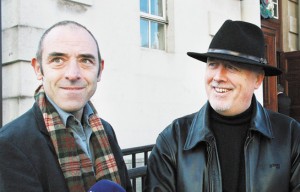
QUESTIONS: Gerard Hodgins, left, pictured with Danny Morrison
PICTURE: Seamus Loughran

THE blanket protests and Hunger Strikes are sacrosanct in republican history. The commitment and courage of the men and women who participated in those prison struggles can never be questioned.

Richard’s [O’Rawe] assertion that the leadership blocked a deal on the Hunger Strike in order to further political ambitions and in the process prolonged the agony doesn’t sit easily in the republican conscience.

So uncomfortable is this fact that most republicans tend to follow the Adams/Morrison narrative that Richard just wants to sell more books and so makes a sensationalist claim about dirty dealings

between the Provisional leadership and the British government in order to increase sales.

This despite the fact that a prima facie case exists that Richard’s assertion has validity: Gerry Adams has (writing in one of his books) previously referred to a happy ending narrative rather than a tell-all story now, yet he won’t elaborate on what this cryptic sentence means.

Gerry Adams has referred to the British coming back with the deal again around the July 18/19 1981.

Gerry Adams has referred to how he got into the habit of catching sleep during the daylight hours during that summer of 1981 because the British would contact him via telephone late at night.

Yet Gerry Adams refuses to put meat on these statements. What is he hiding? What was the true extent of contact between the leadership and the British?

For daring to ask questions like this puts one beyond the pale of the dominant republican narrative. Suddenly you find former comrades in the upper echelons are referring to you as a revisionist, a drug-dealer, a dissident, an antirepublican: no slur is too great, no act too low.

When I learned a meeting was to take place in Gullaghaduff I went along accompanied by Jimmy Dempsey whose son John was killed by the British army the morning Joe McDonnell died.

We both had questions we would like to ask, we were both politely but firmly refused entry to the meeting and I personally was subjected to threats and menaces by a senior Provisional, all because I wanted to ask questions about events in 1981.

When this genie was first let out of the bottle in 2005 the leadership figures were adamant there were neither deals, offers nor anything else. Today they are not so certain.

Bik [Brendan McFarlane] categorically denied that any such conversation took place between him and Richard O’Rawe about accepting a British offer.

Today he says different and remembers “a huge opportunity” and “potential” in the conversation he initially didn’t have with Richard.

On the face of it the evidence points to dark dealings going on in the background of the Hunger Strike, dealings of which nobody on Hunger Strike was aware.

Whether we ever will know the truth of those times is doubtful. The acquisition of any level of power and maintenance of that power is rarely a tale of honour alone.

Sourced from The Irish News

  • Print
  • email
  • Add to favorites
  • Twitter
  • Facebook
  • Netvibes
  • MySpace
  • Google Bookmarks
  • Live
  • Digg
  • del.icio.us
  • NewsVine
  • Technorati
  • StumbleUpon
  • FriendFeed

Irish News: Speculation mounts on the identity of Maze spy

Speculation mounts on the identity of Maze spy
Was there a deal?
By Staff Reporter
29/09/09

THE revelation that the Republic’s government had an operative inside the Maze prison during the 1981 Hunger Strike has led to wide speculation about the identity of the ‘spy’.

Throughout the Troubles it was traditionally the British government or IRA that were accused of having spies within the government or security forces on either side of the border.

The only recorded claim of anyone ever being accused of spying for the Republic’s government in the north came in 2004 when John Hume and three other members of the SDLP were accused by the RUC Special Branch of having spied for the Republic.

A Special Branch report submitted to the Bloody Sunday Tribunal named Mr Hume, Austin Currie, Paddy O’Hanlon and Ivan Cooper as spying for then taoiseach Jack Lynch in the 1970s.

“It is also worth recalling previous intelligence to the effect that Mr Lynch’s intelligence officers in Northern Ireland are Messrs Cooper, Currie, O’Hanlon and Hume,” it said.

Mr Hume described the claim as “absolute rubbish”.

“It’s totally ridiculous and has nothing to do with Bloody Sunday,” he said.

“It underlines the total ignorance of senior RUC men in those days about relationships between nationalists and southern politicians.’’

Mr Hume claimed the SDLP kept in regular contact with all parties in the Dail to work out an agreed approach to Northern Ireland.

“When we were founded as a party in the early 1970s, it was common sense that we would build relationships with the parties in the south,” he said.

“How in heaven’s name could we have been agents of the Irish government?

“If we were, what did they think we were doing?”

While there has been a plethora of books in recent years written about MI5 and even the FBI’s role in the Troubles, little or nothing is known about the southern intelligence service’s role in Northern Ireland.

The southern secret service is understood to be made up of Garda Special Branch, the army intelligence unit G2 and the diplomatic corps of the Department of Foreign Affairs.

It is unclear who heads the secret service in the Republic, how many staff it has at its disposal, or where the department is based.

In 2002 the Republic’s then justice minister Michael McDowell denied that the government even had a secret service.

“There is no secret service structure in this jurisdiction,” he claimed.

However, in the same year it was revealed that the Republic’s secret service agency’s lack of spying activity meant it was forced to hand back £431,665, after spending less than half of its £735,000 spy budget.

Irish government officials refused to state why its secret service had spent only half of its spy budget, stating: “It’s a secret.”

Sourced from The Irish News

  • Print
  • email
  • Add to favorites
  • Twitter
  • Facebook
  • Netvibes
  • MySpace
  • Google Bookmarks
  • Live
  • Digg
  • del.icio.us
  • NewsVine
  • Technorati
  • StumbleUpon
  • FriendFeed

Irish News: First confirmation of Republic’s intelligence operations in north

First confirmation of Republic’s intelligence operations in north
Was there a deal?
By Bimpe Archer
29/09/09

FORMER taoiseach Garret FitzGerald’s revelation that the Republic’s government had a mole in the Maze prison is the first reference to emerge from the Troubles of such operations.

The 83-year-old would not be drawn on the identity or position of the Irish government’s source within the jail.

However, the person was not the only agent from the Republic operating in the north at that time.

One well-placed nationalist source said the Republic’s military intelligence – also known as G2 – was active in the north.

However, he said the unit was unlikely to have had a permanent member placed in the jail during the Hunger Strikes.

G2 did not enjoy the resources of the British intelligence services.

“It wasn’t very big or well-funded, nothing like MI6, and it tended to be largely military intelligence,” he said.

“Garda Special Branch wasn’t operating in the north.

“But there were G2 agents on the streets of Belfast and Derry, picking up whatever information they could find.

“I’m sure the British knew but there wouldn’t have been much knowledge on the unionist side.

“They certainly didn’t make themselves known.

“As far as the Maze goes, they would have made contact with a person involved.

“This it the first time I heard about a mole in the prison.”

Lord Maginnis, who was the Ulster Unionist Party candidate for Fermanagh and South Tyrone in the second by-election in 1981 which resulted from the death of Bobby Sands, said unionists were not unaware of such practices.

“If [Dr FitzGerald] says there was, there was,” he said.

“I always believed in the old saying: ‘There are no secrets in Northern Ireland’.”

G2, or the Defence Forces Directorate of Intelligence, was set up to provide operational intelligence and security to help the Republic’s forces internationally and maintain security at home.

As with most such agencies, staff actively monitor “relevant” political, economic, social and military situations to support military operations.

A relatively small service, G2 does work with foreign governments and intelligence agencies.

The Irish Defence Forces as a whole include intelligence as part of officer training, although those in G2 receive further specialist training.

It came to public notice during the Second World War when it was prominent in the detection and arrest of 13 German spies in Ireland. During this period the IRA was also a target of G2 and remained so in the decades following.

Sourced from The Irish News

  • Print
  • email
  • Add to favorites
  • Twitter
  • Facebook
  • Netvibes
  • MySpace
  • Google Bookmarks
  • Live
  • Digg
  • del.icio.us
  • NewsVine
  • Technorati
  • StumbleUpon
  • FriendFeed

Irish News: The Other Players

THE OTHER PLAYERS

IN compiling this special edition extensive efforts were made to contact most of the main players from the hunger strike era.

Attempts were made to get the views and recollections of British government and Northern Ireland Office officials from that period.

However due to ill-health, the then prime minister Margaret Thatcher and Secretary of State Jim Prior, who took over the role towards the end of the Hunger Strike, were not available.

Humphrey Atkins, who was secretary of state from 1979 to September 1981, and Prisons Minster Michael Allison, have both since died.

Others including Lord Gowrie who followed Mr Allison, were not available for interview, while former senior prison officials in the Maze have since died or were unavailable for comment.

Sinn Fein President Gerry Adams was asked for his views on the hunger strike but was not available.

Danny Morrison, Sinn Fein publicity director during the hunger strikes, declined to take part as did Brendan ‘Bik’ McFarlane, IRA ‘Officer Commanding’ in the jail at the time of the strike.

•  A letter in the Irish News on April 7, 2009, by Richard O’Rawe, discussing the 1981 hunger strike, claimed that documents newly released under the FoI Act stated that ‘republican negotiators, Gerry Adams and Danny Morrison, changed their minds when the British warned that they were going to pull the plug on the process’. We have been asked by Mr Morrison to make clear that he was not named in the documents.


Sourced from The Irish News

  • Print
  • email
  • Add to favorites
  • Twitter
  • Facebook
  • Netvibes
  • MySpace
  • Google Bookmarks
  • Live
  • Digg
  • del.icio.us
  • NewsVine
  • Technorati
  • StumbleUpon
  • FriendFeed

Irish News: Hugh Logue, ICJP

Honour of those who died needs explanation
THE HUNGER STRIKE
By Hugh Logue of the Irish Commission for Justice and Peace
28/09/09

The image of those eight hunger strikers for me has never dimmed. Clothed predominantly in the white attire of hospital, the weakest sitting at a table, water jugs and mugs in hand, the strongest seated on higher tables, or standing behind.

That scene has stayed with me over the last 28 years and will remain imprinted in my brain as long as I live. They had been brought together as a group from their hospital beds to meet us in the canteen of Long Kesh.

Bright articulate young men, some reserved and quiet spoken, others defiant and inquisitive, eyes accentuated, all in various stages of physical decline, eager to live, ready to die. Like their image, respect for them has never dimmed.

I met them as part of the Irish Commission for Justice and Peace (ICJP) as we sought to explore the possibility of squaring their five demands by stretching the British prison regime to a more enlightened, humane, innovative and educationally positive system. The Irish government gave us their full support.

After much coming and going, a best offer was finalised involving new rights on clothes, work, recreation/education, remission and association.

The hunger strikers were positive but cautious, wanting the wider view of their comrades. The prisoners on July 4 issued a statement indicating that a settlement along such lines should be considered.

We were meeting with the relatives and some H-block committee members when the prisoners’ statement reached us. With good reason, the meeting finished with the view that the choreography of concluding the Hunger Strike without further loss of life was being set in place.

Next day we met again with the relatives and on this occasion Sinn Fein representatives were present. The relatives made clear their wish to go for the ICJP-brokered offer.

A senior IRA representative left the meeting early, without saying where he was going, and went in to see the hunger strikers.

When we later visited the hunger strikers that night, their mood had hardened but a number of them clearly indicated that what was on offer was acceptable.

Eventually all agreed that if the British government sent a delegate into the prison and read out the offer it would be accepted.

This condition, we were told, had been demanded as a minimum by the IRA representative who had visited them. Double dealing on the earlier botched hunger strike was given as the reason for this demand.

We went back to the British and it was agreed that an envoy would visit the hunger strikers to read out the offer. As we all know, the British prevaricated and Joe Mc Donnell tragically died before any visit was made, triggering a whole new scenario.

The ICJP next day railed against the British government for its unpardonable complacency and indicted its utterly callous conduct.

That indictment remains.

Four years ago – when I reviewed Blanketmen [by Richard O’Rawe] – I asked that a sane debate take place on its principal assertions, instead of the vilification of its author.

I also suggested that were the Mountain Climber, the British and the republican leadership to spell out what they knew, it would be possible to reach informed conclusions.

The British, via the Freedom of Information Act, have now put new material into the public domain. Mountain Climber has now stated that he passed the British offer to his IRA interlocutor. In what form did the offer come?

Was British secretary of state [Humphrey] Atkins able to sign off if he got an affirmative reply from the IRA? It now appears he was.

Did those in the republican leadership understand that? Parallel Republican writing that Margaret Thatcher wished a settlement suggests they did.

This exchange was at least a day before the hunger strikers were told to demand, via the ICJP, verification from the British authorities.

If the IRA had the British offer , why were the hunger strikers being put through a ritual? The hunger strikers, on the instruction of the IRA, were demanding that the ICJP deliver the British to deliver an offer statement. And the British, whilst agreeing to deliver the statement, apparently were waiting on the okay from the IRA before delivering the statement to the hunger strikers that they had already delivered to the IRA.

And all the while, a hunger striker was slipping in and out of consciousness, edging closer to death. Too grotesque to contemplate. But it happened. Why? Truly, in the name, honour and dignity of the hunger strikers, explanation and clarification is needed.

This is not said for any reason other than that I genuinely do not know for sure, to this day, where the motivation of others lay.

I do know that we in the ICJP had an honourable resolution that would have saved the lives of six hunger strikers and that it was acceptable to the hunger strikers.

It appears from the British statement, given to the IRA via the Mountain Climber, that the British were ready to stand over all that had been agreed with the ICJP.

But were they only ready to go public on it if they got thumbs up from the Republican leadership?

Was there procrastination on the IRA side where a clear affirmative response would have sealed the deal and saved those lives? Was there a rejection?

Did the IRA genuinely overplay their hand believing that once the British were into dialogue more could be extracted?

The high regard that many serious political leaders now have for the republican leadership relates to their focus on ‘the long game’. Did ‘the long game’ focus come into play on this occasion?

Republican leadership has been assiduous in having its tale of ‘the struggle’ committed to history, but the Hunger Strike has been given a wide berth.

Some years ago, as the 20th anniversary of the Hunger Strike approached, I was told by a senior republican that the reason for staying away from the Hunger Strike was ‘because of the range of views, feelings and passions it could arouse within the movement – not all of them positive.’

He was right about that, but whatever those views feelings and passions, it is time for truth to shine.


Sourced from The Irish News

  • Print
  • email
  • Add to favorites
  • Twitter
  • Facebook
  • Netvibes
  • MySpace
  • Google Bookmarks
  • Live
  • Digg
  • del.icio.us
  • NewsVine
  • Technorati
  • StumbleUpon
  • FriendFeed

Recent Items

Contents

Use this link to access all contents

New to Archive


There's an inner thing in every man,
Do you know this thing my friend?

It has withstood the blows of a million years, and will do so to the end.