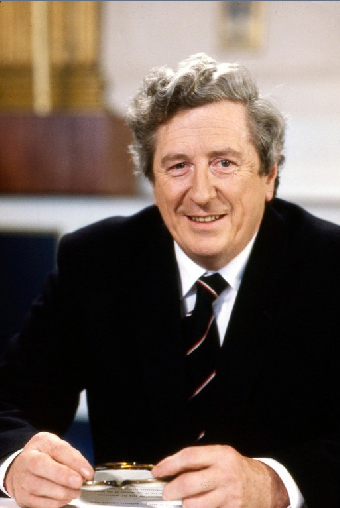
 Extract from former Taoiseach Garret FitzGerald’s 1991 autobigography, All in a Life, 1991; pages 367 – 371.
This section of Fitzgerald’s autobiography is a detailed account that deals specifically with the events during the hunger strike of 1 – 8 July.
It sheds particular light on the Adams-Morrison negotiations with the British and its impact on the ICJP’s efforts.
Compare with Danny Morrison’s timelines: 2006 and 2009
During these three traumatic weeks of July, however, I had to give much of my attention to the evolution of the hunger strike crisis. Our position on this was that, in accordance with the traditional policy of Irish Governments on such strikes within their own jurisdiction, we would not press the British government to concede to paramilitary prisoners the political status demanded by the IRA. We had, however, noted proposals made by the Commission of Justice and Peace of the Roman Catholic hierarchy on 3 June. The commission had suggested the extension to male prisoners in the Maze Prison of the arrangement for the use of their own clothes that applied to women prisoners in Armagh Jail, as well as greater freedom of association, not involving military type activities, an orientation of work towards cultural and educational activities. Even those these proposals did not meet their five demands, the prisoners had expressed appreciation of the commission’s proposals; this sounded hopeful.
Immediately before the Dáil reassembled Charles Haughey had called in the British Ambassador and had issued a statement saying that the time to find a solution to prevent further deaths was now. The British government had responded to this with a long statement saying that there was scope for development in the prison regime but that this process of improvement could not proceed further under the duress of a hunger strike.
The IRA reaction, allegedly on behalf of the prisoners, had been to describe this response as ‘arrogant’. Nevertheless the Commission for Justice and Peace saw the British statement as encouraging – as did we – and sought further clarification. Our information from the prison was that, despite the IRA statement purporting to speak for them, the prisoners wanted the commission to continue its involvement. We were also aware that the relatives of the prisoners on hunger strike were becoming increasingly restive at the IRA’s intransigent approach.
On 1 July Michael O’Leary and I communicated our view on these points to the British Ambassador and urged that the NIO meet the commission again and allow the commission to meet the prisoners. We also warned against any policy of brinkmanship, which – especially in the view of the nearness to death of one hunger striker, Joe McDonnell – could harden attitudes, including in particular the attitudes of the relatives, who had the power to influence developments. That night I rang Margaret Thatcher to make these points directly to her.
At this point the relatives of the hunger strikers asked to see me. Despite the fact that I believe it generally undesirable in an issue of this kind to become involved in potentially emotional situations with the relatives of those concerned, I agreed to see them, in view of their crucial role and the fact that almost all of them were known to want a settlement – as indeed, it seemed, did most of the prisoners at that point. This meeting on 3 July was, as I had expected, intensely distressing, but it enabled me to see for myself that while there were those among them who took a straight IRA line, most of them were indeed primarily concerned to end the hunger strike.
Both that day and the next the Minister of State at the NIO, Michael Allison, met the commission again. He gave the impression that he wanted to be more conciliatory, but referred to ‘the lady behind the veil’, namely the Prime Minister. As we had proposed, he cleared a visit by the Commission for Justice and Peace to the prisoners, who then issued a statement that, as we had thought likely, was much more conciliatory than the one published by the IRA on their behalf three days earlier. They said they were not looking for any special privileges as against other prisoners, and that the British government could meet their requirements without any sacrifice of principle. It looked as if the commission would now be able to resolve the dispute with Michael Allison, who seemed close to accepting their proposals.
Several days were to elapse before we learnt what happened next. Following the conciliatory statement by the prisoners, direct contact had been made with the IRA by an agent of the British government, through an intermediary. Disastrously, his proposals, while close to what the prisoners and Allison, through the commission, were near to agreeing, went further in one respect. Not unnaturally the IRA preferred this somewhat wider offer, and above all the opportunity to be directly involved in discussions with the British government. They were then allowed by the British authorities to send Danny Morrison secretly into the prison for discussions with the hunger strikers and with the IRA leader there, Brendan McFarlane. This visit was later described by the IRA as a test of the authority of the British government representative in touch with them to bypass the NIO.
The commission, unaware of all this, was preparing its document, which was to be the basis for an agreement involving the ending of the hunger strike. On Monday, 6 July at 3:30pm, according to the account given to me shortly after these events, Gerry Adams phoned the commission seeking a meeting, revealing that the British government had made contact with him. An hour and a half later two members of the commission met Adams and Morrison, who told them that this contact was ‘London based’ and had been in touch with them ‘last time round’, i.e. during the 1980 hunger strike. Adams demanded that the commission phone the NIO to cancel their meeting.
Members of the commission, furious at this development, then met Allison and four of his officials. They asked him if he had been in communication with the hunger strikers or with those with authority over them. He said that no member of his office had been in contact, and, when pressed, repeated this line. They then discussed the Commission’s own proposals.
When the commission contacted us immediately after this meeting, they told us nothing about the London contact with Adams and Morrison – understandably, given that this was a telephone call – which in any event still did not loom large in their eyes at that point beside the agreement they believed they had reached, which indeed seemed to them to have settled the dispute and to be about to end the hunger strike. The commission had produced to Allison the statement on which they had been working, which they described as ‘a true summary of the essential points of prison reform that had emerged.’ They told Allison that this statement was considered by the hunger strikers to be ‘the formation [sic] of a resolution of the hunger strike,’ provided that they received ‘satisfactory clarification of detail and confirmation by an NIO official to the prisoners personally of the commitment of the British Government to act according to the spirit and the letter’ of the statement. Although there was a difference of opinion on whether certain of the concessions were ‘illustrative’ or not, this does not seem to have been a problem for the British at the time, since Allison went out to make a phone call and then came back to say that he had approval. He proposed that an NIO official would see the prisoners with the governor by mid-morning the following day, Tuesday. When we received this information Demot Nally phoned the British Ambassador to urge that this confirmatory visit take place as soon as possible.
Late that night, however, the commission was phoned by Danny Morrison seeking a meeting, which they refused; but half an hour later he arrived at the hotel, saying that the Sinn Fein-IRA contacts with the British were continuing through the night and that he needed to see the actual commission proposals. This request was refused, although he was given the general gist of them.
Twelve hours later, on Tuesday afternoon, Gerry Adams rang to say that the British had now made an offer but that it was not enough. Three members of the commission then met Adams and Morrison, who produced their version of the offer that they said had been made to them. The commission saw this as almost a replica of their own proposals but with an additional provision about access to Open University courses.
Meanwhile the commission had spent an agonising day, for while London had been negotiating with the IRA, Allison and the NIO had prevaricated about the prison visit, repeatedly promising that the official was about to go to the prison. But at ten o’clock that night Allison phoned to say that the official would not now be going to the prison until the following morning – adding, however, that this delay would be to the prisoners’ benefit.
At 8:30pm, however, Morrison and a companion had come without warning to the hotel where the commission had its base. Their attitude was threatening. Morrison said their contact had been put in jeopardy as a result of the commission revealing its existence at its meeting with Allison; the officials present with Allison had not known of the contact. Despite this onslaught the commission refused to keep Morrison informed of their actions.
Just before 5:00am that night Joe McDonnell died. At 6:30 the governor, in the presence of an NIO official, read a statement to the prisoners that differed markedly from the one prepared by the commission, and, in their view, approved by Allison thirty-six hours earlier. Fifteen minutes later Adams rang the commission to say that at 5:30am the contact with London had been terminated without explanation.
When we heard the news of Joe McDonnell’s death and of the last-minute hardening of the British position, we were shattered. We had been quite unprepared for this volte-face, for we, of course, had known nothing whatever of the disastrous British approach to Adams and Morrison. Nor had we known of the IRA’s attempts – regardless of the threat this posed to the lives of the prisoners, and especially to that of Joe McDonnell – to raise the ante by seeking concessions beyond what the prisoners had said they could accept. We had believed that the IRA had been in effect bypassed by the commission’s direct contact with the prisoners at the weekend, which we had helped to arrange.
That afternoon the Commission for Justice and Peace issued a statement setting out the discussions they had had with Allison leading to the agreement reached on Monday evening. I then issued a statement recalling that I had repeatedly said that a solution could be reached through a flexibility of approach that need not sacrifice any principle. While the onus to show this flexibility rested with both sides, the greater responsibility must, as always, rest on those with the greater power.
I have given a full account of these events (some of them unknown to us at the time they took place) because in retrospect I think that the shock of learning that a solution seemed to have been sabotaged by yet another and, as it seemed to us, astonishingly ham-fisted approach on behalf of the British government to the IRA influenced the extent and intensity of the efforts I deployed in the weeks that followed, in the hope – vain, as it turned out – of bringing that government back to the point it had apparently reached on Monday 6 July.
During these weeks in July and early August I may also have been influenced more than I realised at the time by the frustration I felt at having to deal thereafter with the British government while I had, in a sense, one hand tied behind my back. For I would naturally have liked to confront them with — and would have liked even more to be able to make public — my knowledge of the furtive contacts on their behalf with the IRA, which seemed to have proved fatal to the resolution of the problem. But careful reflection led me to conclude that any revelation to the British of our knowledge of these activities would be likely to render a solution less rather than more likely. Disclosure of this knowledge could have drive the British government, and the Prime Minister in particular, into a state of embarrassed intransigence. This might have been accompanied by denials, which — if we had refused to accept them, as in honesty we would have had to do — would have made impossible the development of any kind of reasonable relationship between that government and ourselves. The fact moreover that our information, while absolutely convincing in its detail, was necessarily second-hand (it was what a member of the commission had told us Adams and Morrison had said to them) reinforced the need for caution.
- Sourced from Garret FitzGerald – All in a Life, An Autobiography, 1991; pages 367 – 371.
- See also Danny Morrison’s timelines: 2006 and 2009

 It has withstood the blows of a million years, and will do so to the end.